Skool is worth it for those who have a customer base. It can help them turn their membership into an online community. The platform combines course hosting, community management, and event planning. It's a single, user-friendly solution. Its community focus, gamification, and $99 fee make it cheap for creators with a large audience. It offers unlimited members and courses in one community.
Skool excels in community engagement and course delivery. However, it may not suit those selling physical products or needing advanced customization. Its subscription-only model and no one-time payment options may be a drawback for some. Despite these drawbacks, Skool provides a distraction-free and ad-free environment.
A Reddit user criticized Skool as overly complicated for community management. The Reddit post says you need tools like Zapier, ClickFunnels, and Canva to track invites and members. It also needs a separate domain. This adds costs and effort. This complexity made them question whether Skool is worth it for managing communities.

A Reddit user says she has been a member since January. She joined 16 free communities. The Reddit post stated that Skool is more valuable and has better vibes than Facebook groups. Some free groups had paid options. They found them reasonable, given the effort to run them. The user encouraged others to try a free Skool community to see its benefits.


George Vlasyev highlights Skool's features. It includes a course creator, gamified community tools, a calendar, and a mobile app. At $99 per month per group, it allows unlimited members. This makes it a cheap choice for creators with large communities. He appreciates its simple design, which is easy for both admins and members to use. Skool has no live chat support. It offers email support and a helpful user community. However, George notes some drawbacks.
The problems in Skool according to George Vlasyev are:
A community on Skool can generate recurring income. But, it needs active engagement to keep members involved. I run an online business that earns me over $52K a month. Dan and I manage a community of over 7,400 members. In this article, I’ll discuss whether Skool is worth it in 2024. I’ll also highlight some hidden challenges. They make Skool a less ideal option for starting an online business. At the same time, I’ll explain why Skool might still be worth trying for certain people.

1. Skool Gives You Limited Control Over Your Community
Skool limits control and restricts how you customize and manage it to fit your needs. These limitations affect your:
Skool only supports text and images. You can't upload videos or embed content with ease. Skool does not have a built-in video posting feature. You need to link YouTube, Vimeo, Loom, or Wistia. This limits interactive media.
You can have only one group per subscription. No sub-groups to organize members by topic or interest. Design choices are basic, with fixed layouts and limited branding, reducing customization. Member management tools are minimal. There's no option for many admins or detailed member analytics. So, it's hard to watch and grow your community.
2. Skool Requires Time to Build Your Audience on Skool
Building an audience on Skool takes time because it lacks built-in discovery features. The Community Professionals Survey says 42% of online communities are over five years old. CMX notes that 20% have existed for 3-4 years. Also, Community Roundtable reports that 21% of communities are 1-2 years old. So, successful communities often take years to grow. Unlike Facebook or LinkedIn, Skool lacks active users. They can't find your group through searches or recommendations. So, it is up to you to grow your community. To attract community members to Skool:
This process can be slow, especially if you’re starting from scratch or lack a strong following. Without internal traffic, it takes time to build an engaged audience. You must interact on a regular basis.
3. Skool Risks Your Community Members of Losing to Other Skool
Skool’s platform allows users to join multiple communities. Your members can find and join other groups within Skool without difficulty. This creates constant competition for attention. If another Skool group has better content, your members can leave.
This risk is greater because Skool lacks strong retention tools. You can't control how members interact on the platform. If another community has more engaging discussions or events, members might shift focus. This competition can hurt participation and growth. It may reduce loyalty and engagement over time.
5. Skool Only Allows One Community per Subscription
Skool restricts you to managing one community per subscription. To create more topic-based communities, buy another $99/month subscription. This setup becomes costly in a short time if you need multiple communities.
For example, if your online business needs separate communities for beginners and advanced users, you'd pay $99 a month for each. This limits management, as each community has a separate subscription. It also increases expenses.
4. Skool Needs Ongoing Effort to Maintain Your Community
Skool requires constant effort to keep your community active. It lacks built-in engagement tools like automated notifications, content recommendations, or discussion algorithms. Other platforms offer these features to maintain activity with little effort. But, Skool places this responsibility on you. To keep your community lively:
Without constant activity from you, members may lose interest or leave. Skool has no re-engagement tools. So, you can't rely on it to bring back inactive members.
4. Skool Needs Ongoing Effort to Maintain Your Community
Skool requires constant effort to keep your community active. It lacks built-in engagement tools like automated notifications, content recommendations, or discussion algorithms. Other platforms offer these features to maintain activity with little effort. But, Skool places this responsibility on you. To keep your community lively:
Without constant activity from you, members may lose interest or leave. Skool has no re-engagement tools. So, you can't rely on it to bring back inactive members.
5. Skool Only Allows One Community per Subscription
Skool restricts you to managing one community per subscription. To create more topic-based communities, buy another $99/month subscription. This setup becomes costly in a short time if you need multiple communities.
For example, if your online business needs separate communities for beginners and advanced users, you'd pay $99 a month for each. This limits management, as each community has a separate subscription. It also increases expenses.
6. Skool Has Few Marketing and Sales Tools
Marketing and sales tools on Skool are limited compared to other community platforms. The platform lacks key features. It has no email marketing, automated sales funnels, or detailed analytics. It makes it harder for creators to promote their communities and sell products. Basic tools like affiliate tracking, custom landing pages, or A/B testing are also missing.
Skool's basic marketing features restrict your ability to grow and monetize your community. You can't create sophisticated marketing campaigns or track member behavior in detail. You must use external platforms. There are no built-in tools for upselling, cross-selling, or running promotions. This means extra work and costs to achieve your marketing goals. You need separate tools to manage email lists, track conversions, and analyze engagement.
Is Skool Worth It Per Reddit?
A Reddit user commends Skool for its effective approach to community building. The post says Skool is better than other platforms. It combines courses, a calendar, group chats, and other community features. They also highlight how the affiliate program and built-in tools make monetization easy.
The Reddit post says that Skool is run by experienced marketers, Alex Hormozi and Sam Ovens. This adds credibility. The user believes Skool fills a market gap well and delivers strong results.

A Reddit user says Skool is simpler than Udemy. The user says that he joined a graphic design group in Skool. Then, he receives valuable feedback from industry professionals. Skool allows for deeper interaction, especially with design critiques.
The user likes Skool's $50 monthly fee and its functions. However, Skool is now $99 per month.
They don't mind the plain branding since it works well. Having worked with Sam Ovens, they say he’s trustworthy.

Is Skool Worth It Per YouTube?

Daniel from Tech and Data says Skool is worth it. It's a simple, all-in-one platform to build and monetize a community. It combines course hosting, live chats, and community interaction. Daniel believes that it is easier to use than Udemy or Coursera. Focusing on community engagement is a big advantage for creators, coaches, and influencers. Skool lacks built-in video hosting and quizzes. But, at $99 a month, Daniel thinks it's a good deal. The two-week free trial lets you test all features before committing.

Channel Profits feels unimpressed with Skool because it lacks features. He almost stopped using it. However, he finds Skool's unique features valuable. They help creators build engaged communities. Channel Profits describes Skool as a business-focused Facebook. It boosts community engagement with gamification, points, and rewards. It lacks native video hosting and live calls. But, they believe Skool is a community-first platform. It supports business growth within its ecosystem.
Is Skool Not Worth It? 3 Real-Life Struggle Stories

Romney says Skool’s main challenge is the constant effort needed to keep the community active. As a host, you must frequently update content, answer questions, and engage members. This is vital in paid groups, where members expect consistent interaction.
He also notes that the $99 monthly fee is a strain. The cost stays the same, no matter the number of members. This creates pressure to expand the membership base. Romney sees potential for recurring revenue in Skool. But, it needs much time and effort to maintain a thriving community.

Courseology notes some downsides of Skool, compared to other platforms:
- Limited Pricing Flexibility: Skool’s $99/month plan includes all features. But, it may not suit smaller communities. In contrast, Kajabi offers multiple pricing options for different budgets. Yet, this can add complexity.
- Minimal Integration Options: Skool’s simple interface reduces distractions but limits external integrations. This limits users who want to link to other platforms or use tools for events and discussions.
- Limited Community Customization: Skool is easy to use. Its simplicity is a plus. But, it may restrict those wanting more control over layout or group tiers.

The Ninja Guides review points out Skool’s limitations. The high $99/month price may be a drawback for some, though monetization features can help offset it. The "Classroom" feature only supports one-time payments. It can't offer free access for active members. The chat functionality is basic, lacking interactive features that could boost engagement. Skool is great for building communities. However, users wanting more customization may find it too rigid.
Why Skool Is Still Worth to Try?
Is Skool The Best Platform to Start Your Community?
Skool is not the best platform to start your community, but it is good at engagement and learning. It has a clean, user-friendly interface that fosters connection and interaction. Gamification features as points and levels keep members active and engaged. Skool also simplifies course creation and sharing. The built-in calendar and event tools make organizing meetups easy.
However, Skool may not suit everyone. At $99 per month, it can be expensive for small groups or beginners. It also lacks advanced marketing features and offers limited customization for community design. Those needing these features or more control may want to explore other platforms.
What Are Subscription Business Model Ideas You Can Try on Skool?
Subscription business model ideas you can try on Skool include:
A popular option is a paid community focused on a skill. For example, a fitness group where members pay monthly for workout plans, nutrition tips, and live coaching. You can also offer online courses with regular updates.
For example, a photography course that adds new lessons, critiques, and challenges each month. Tiered memberships allow for different access levels. A basic tier grants access to the community and its resources. Higher tiers provide one-on-one coaching or exclusive content.
Digital product subscriptions, like monthly e-books, templates, or software tools, are also effective. These models use Skool's tools to engage the community, host courses, and run subscriptions.
Is Skool Legit?
Skool is a legit online platform for learning and building communities. It combines social media and course features. You can learn through courses while engaging with a peer community. Skool has forums, messaging, and notifications to connect learners. It's great for learning new skills, networking, and staying motivated.
Skool helps creators and coaches teach courses and build communities in one place. The platform's clear layout helps users follow lessons and join discussions. It receives positive feedback for making users feel connected. Skool is a reliable tool for online education and community building.

Tom Youngs confirms that Skool is a legit platform to build a profitable online business. Skool combines content posting, community interaction, and business tools all in one place. It attracts and converts traffic to help you grow your communities. Youngs finds Skool’s setup simple and efficient. It helps creators and educators engage and monetize their communities. Youngs plans to build his own Skool community. He thinks it is better than complex setups like e-commerce or SMMA agencies. Skool's focus on one product and one marketing channel makes it ideal for all. It suits both beginners and experienced entrepreneurs. They want a simple way to build a community.
Conclusion: Why Local Lead Gen Biz Is Worth More Than Creating Community in Skool?
Local lead generation is worth more than creating a community in Skool because it offers full control and steady passive income. Each lead generation website can earn $500 to $3,000 per month from local businesses renting them. You own the websites. You set the prices and choose clients. This gives you full control over your business and income.
Building a community in Skool is harder. It depends on factors outside your control, like platform limits and member engagement. Skool helps create connections. But, it limits ownership and scalability. You can't grow beyond the platform. Your income relies on keeping members engaged and renewing subscriptions. Lead generation websites rank and then produce leads with little effort. They provide a stable income.
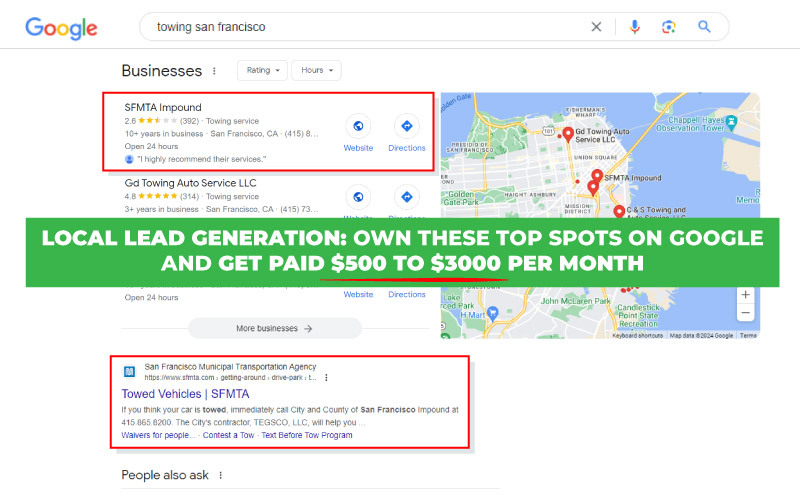
Lead generation also faces less competition. You usually compete with 10-15 local businesses in your niche. This makes it easier to dominate the market. Local businesses always need new leads. So, there is a constant demand for your services. To build a stable, controlled business, join a local lead gen community of over 7,400 students.
The post Is Skool Worth It? 6 Unseen Dangers That Make It Not the Best Option appeared first on Ippei Best Online Business.